
- Most wasted time doesn't come from laziness — it comes from starting tasks without checking whether they deserve your hours in the first place.
- A set of clear, reusable decision rules lets you evaluate tasks before starting without overthinking every single item on your list.
- "Reward" is broader than money — it includes skills gained, future time saved, stress removed, and relationships built.
- The opportunity cost of tasks matters just as much as the direct benefit: saying yes to one thing always means saying no to something else.
- High-value tasks tend to compound; low-value tasks tend to repeat without producing anything lasting.
- Running a task through even two or three decision rules before starting can stop hours of wasted effort every week.
Why Most People Spend Time on Tasks That Aren't Worth It
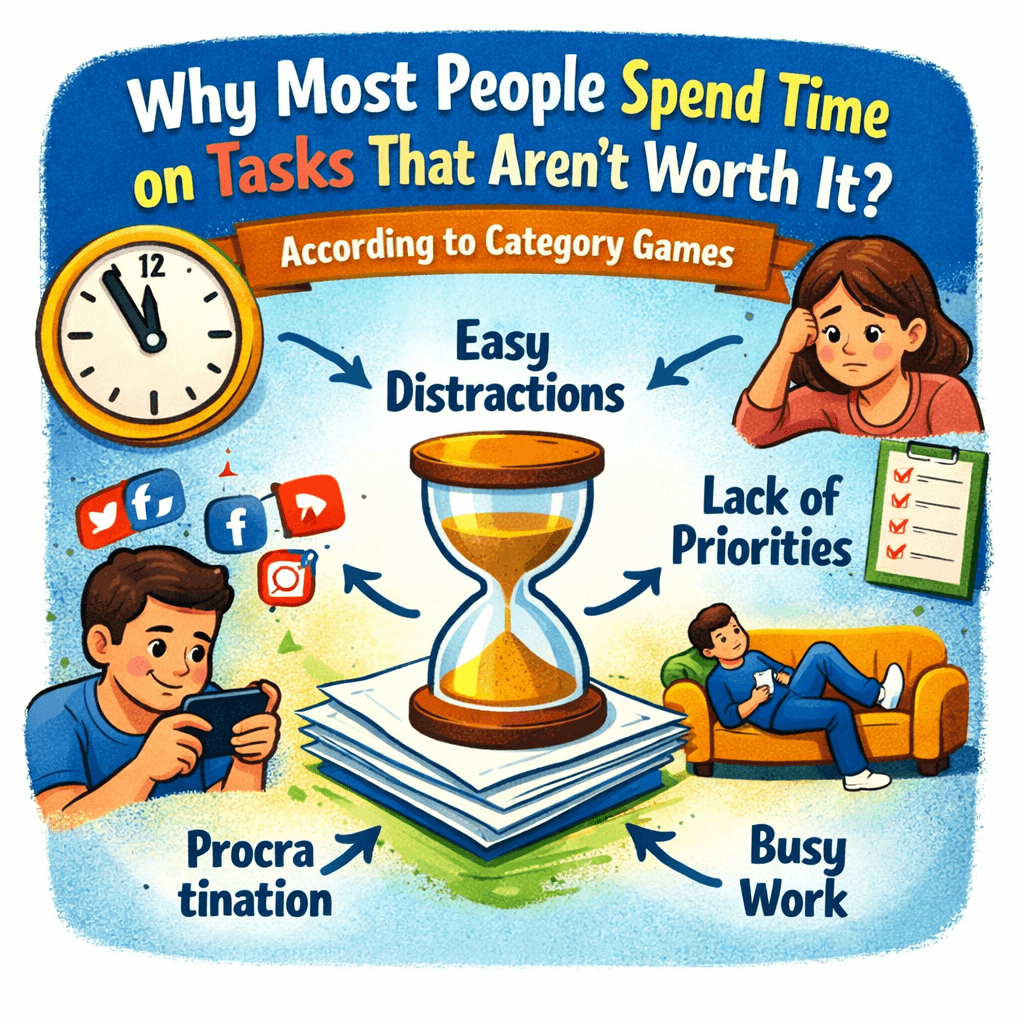
The problem is not that people are undisciplined. It is that most of us never developed a habit of checking whether a task actually deserves our time before we start it. Something lands in the inbox, someone asks a favor, a vague idea shows up on a to-do list, and we start working without pausing to run any kind of filter.
The result is a week full of completed tasks that moved nothing forward.
At CashDrill, we cover practical decision-making tools for people who want to work smarter, protect their time, and get more value from every hour they put in. This guide is built around one of the most actionable of those tools: a simple framework to evaluate tasks before you commit to them, not after you've already spent an hour you can't get back.
Quick Definition: Time investment vs. reward is the comparison between the real cost of doing a task, hours spent, energy used, and other opportunities sacrificed, and the concrete value it actually produces when finished.
A decision rule is a short, testable condition you run a task through before committing. Rules are more useful than vague advice like "focus on what matters" because they give you something specific to check. Each rule below comes with a real-world example so you can see exactly what applying it looks like in practice.
The 7 Decision Rules for Evaluating Any Task
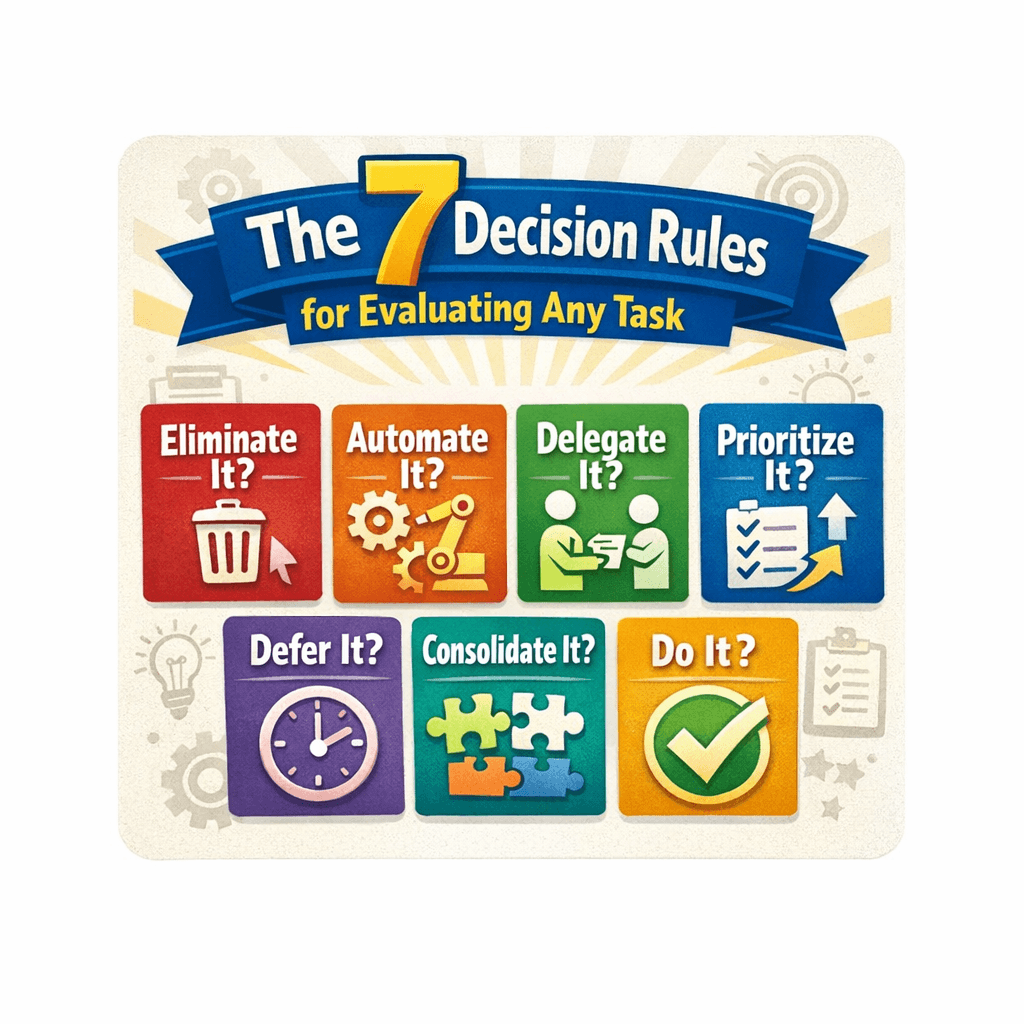
Rule 1: If You Can't Name the Outcome, Don't Start
Before touching any task, you should be able to finish this sentence in one line: "When this is done, I will have ___." If you can't, the task isn't defined well enough to be worth starting. Vague tasks produce vague results and almost always take longer than expected because there's no finish line.
Example in practice: Marcus gets a message from a colleague asking him to "look into the competitor landscape." He opens his browser and starts reading. An hour later, he still doesn't know when he is done, what format the output should be in, or who is using the information. The task had no defined outcome, so there was no way to complete it efficiently. If Marcus had applied this rule first, he would have replied: "Sure, should I send you a one-page summary of their top three product differences by Thursday?" That is a task. The original ask was a rabbit hole.
If/Then Rule: If a task cannot be completed in a defined, observable way, it is not ready to be worked on. Clarify the outcome before you spend a minute on it.
Rule 2: If the Task Doesn't Connect to Any Goal You've Set, Question It First
Plenty of tasks feel important in the moment, especially if someone else needs them done. But if a task doesn't link back to something you're actually trying to achieve, you should at least pause and ask whose goals it is serving before you invest your time. This is a core part of learning how to decide if a task is worth your time: separating tasks that serve your priorities from tasks that serve everyone else's.
Example in practice: Priya is building a freelance writing business. A friend asks if she can help redesign a flyer for a community event, it'll take about three hours. Priya is a good designer and could do it, but when she applies this rule, she realizes it doesn't build her writing portfolio, doesn't bring in income, and doesn't connect to anything on her quarterly goal list. She helps for 30 minutes with feedback on the layout instead of doing it herself, which respects the friendship without sacrificing three hours of building time.
Rule 3: If the Time Cost Is More Than 3× the Reward, Delegate or Drop It
This is where how to measure reward vs time spent becomes a concrete exercise rather than a vague feeling. You don't need a spreadsheet, just a rough, honest comparison. If the time a task takes is dramatically out of proportion with what it actually produces, it is a low-ratio task and shouldn't be sitting at the top of your priority list.
Example in practice: James spends about 90 minutes every week manually formatting weekly reports that go to one internal stakeholder who, when asked, admits he mostly skims them. The reward is minimal, a formatted document that informs one person who barely reads it. The cost is 6 hours a month. When James runs the ratio, it fails immediately. He builds a simple template that auto-formats in 10 minutes, cutting the time cost by 85%. Same output, almost no time investment.
Below are examples of high value vs low value tasks to make this ratio comparison concrete and immediately usable:
Rule 4: If Someone Else Can Do It at Lower Cost, Hand It Off
Your time has value, and the highest use of your hours is the work only you can do. Any task that someone else can handle at comparable quality for less cost (in time, money, or both) is a delegation candidate, not a personal to-do. Understanding the opportunity cost of tasks is what makes this rule click: every hour you spend on a low-skill task is an hour you're not spending on something that only you can deliver.
Example in practice: Nina is a consultant who earns a strong hourly rate from clients. She also spends four hours a month doing her own bookkeeping. A bookkeeper would charge a fraction of what Nina earns in four hours of consulting work. Every month she keeps doing it herself, she's paying full price in opportunity cost for a low-skill task. Once she applies this rule consciously, she outsources it within a week. The math wasn't close, she just never stopped to check.
Rule 5: If Urgency Is the Only Reason You're Doing It, Pause
Urgency is pressure. It is not importance. A task that makes noise, an unread notification, an overflowing inbox, a request with a blinking deadline, activates a stress response that makes it feel critical. But urgency is created by timing and framing, not by actual value. Before you respond to that pressure, check what the task is actually worth.
Example in practice: Derek gets an email marked "urgent" from a vendor asking him to review and sign off on a minor contract amendment. He nearly drops everything to handle it. But when he pauses and applies this rule, he realizes the amendment is minor, affects a contract that runs for six more months, and has no legal consequence if he signs it next week rather than today. The urgency was in the vendor's interest, not his. He schedules 20 minutes for it on Thursday and returns to the high-value project he was already in the middle of.
⚠ Warning: Urgency created by someone else's timeline is one of the most common sources of low-value task creep. Every "urgent" request from outside your own priorities deserves the same filter as everything else.
Rule 6: If a Task Compounds Over Time, Weight It Higher
Not all rewards are immediate. Some tasks pay off slowly and steadily, and those are often the most important ones to protect. A task that builds a skill, creates a system, or strengthens a key relationship is worth more than its immediate return suggests, because it keeps paying off in the future.
Example in practice: Leila is a junior data analyst. She has two options for how to spend a free Friday afternoon: catching up on routine data cleaning tasks (immediate, tangible, clears the backlog) or learning a new automation tool her senior colleague mentioned (takes more focus, no immediate deliverable). Routine cleaning has a fixed reward, the backlog gets smaller. The automation tool, once learned, could eliminate the routine cleaning almost entirely and make her a stronger candidate for her next role. Leila applies the compounding rule and spends the afternoon on the tool. Three months later, she's automated 60% of her weekly data prep.
If/Then Rule: If a task builds something, a skill, a system, a relationship, that will reduce future effort or increase future reward, treat it as higher priority than its immediate return suggests.
Rule 7: If You've Delayed It Three or More Times, Run the Full Framework Before You Start
Chronic delay is data. If a task keeps getting pushed back, your instincts may already know that it's low-value — you just haven't given yourself permission to question it formally. When a task has been on your list for two weeks or longer without progress, don't just restart it. Run it through the time vs reward framework before you commit another hour to it.
Example in practice: Tom has had "update personal website" on his list for six weeks. Every Sunday, he moves it to the following week. When he finally applies this rule and runs the full framework, he asks himself honestly: Does this have a clear outcome? (Not really, "update" could mean anything.) Does it connect to a current goal? (Barely, he is not actively job searching.) Is the time cost worth the reward right now? (Not compared to the project proposal he keeps deprioritizing.) Tom removes it from the active list, replaces it with "define what updating the site actually means and whether I need it this quarter," and frees his mental RAM for work that's already delivering results.
Common Mistakes That Keep Low-Value Tasks Alive
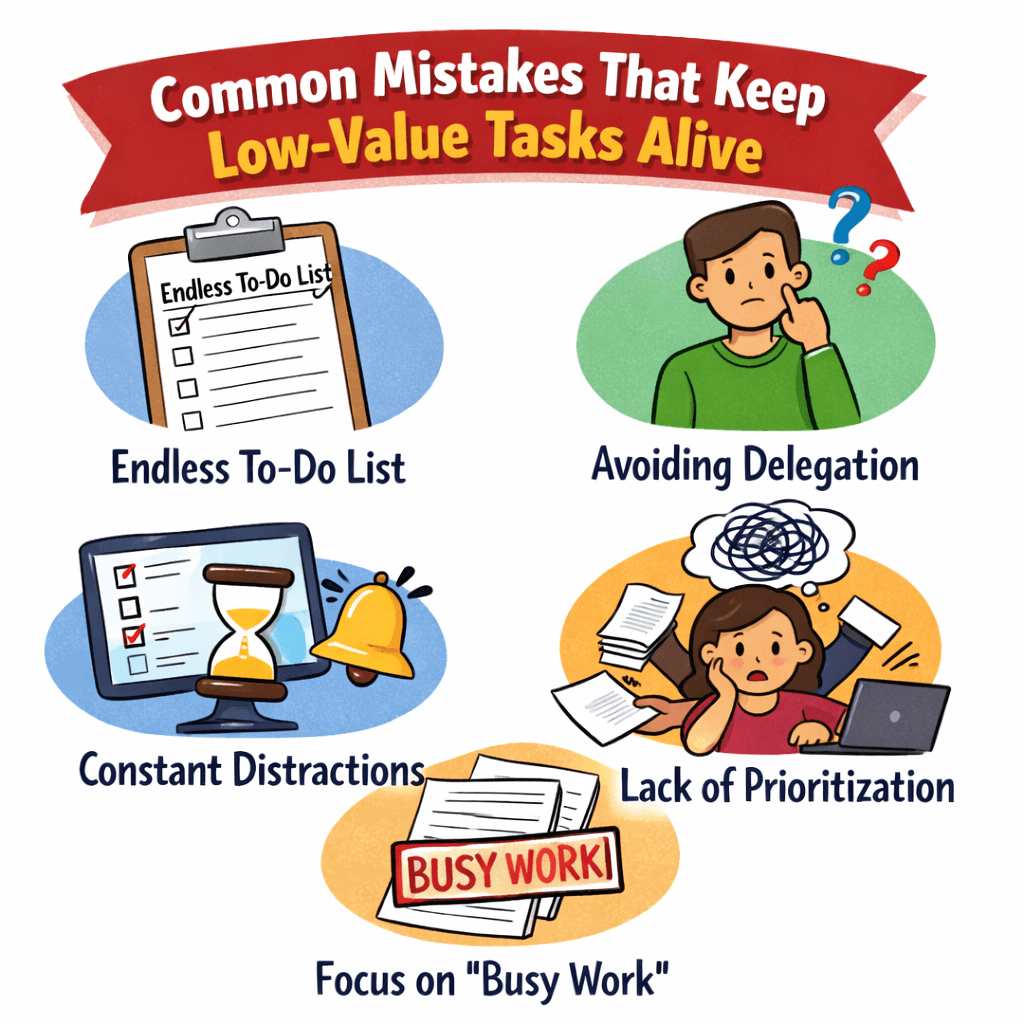
⚠ Mistake 1 — Treating completion as progress. Finishing ten low-value tasks is not the same as advancing a single meaningful goal. A cleared to-do list feels good, but it doesn't automatically mean the right things got done.
⚠ Mistake 2 — Ignoring opportunity cost. People evaluate tasks in isolation — "will this be worth the hour?" — without asking what they're giving up to do it. A task that seems reasonable alone can be a terrible choice when you account for what it displaces.
⚠ Mistake 3 — Sunk cost thinking. "I've already started, so I should finish" is not a sound reason to continue a low-value task. The time already spent is gone regardless of what you do next. The only question is what to do with the time still remaining.
⚠ Mistake 4 — Responding to effort with effort. Someone sent you a long email, so it must deserve a long reply. A task has a lot of steps, so it must be important. Effort signals aren't value signals. Judge what a task is worth by its outcome, not by how much work surrounds it.
Final Words:
Building the habit of running decision rules before you start a task is one of the highest-leverage things you can do with your working hours. The rules don't require software, a system, or a personality overhaul. They require about two minutes of honest thinking before you commit. Start with Rule 1 today, just once, on the next task you're about to begin. Ask if you can name the outcome. That one question alone will save more time than most productivity tools ever will.