
- Scam reward apps almost always promise unusually high or instant payouts that legitimate platforms simply cannot match.
- A moving payout threshold, one that keeps rising just before you can withdraw — is one of the clearest signs of a reward app withdrawal scam.
- Fake "support" teams use scripted delays, excessive personal data requests, and no verifiable contact information to string users along.
- Fake app reviews on reward apps are often posted in bulk with identical phrasing and no prior account history on the reviewer's profile.
- If you are asked to pay any fee to release your earnings, stop immediately, that is a textbook reward app withdrawal scam.
- Legitimate reward apps are transparent about payout terms, have a verifiable company identity, and never require payment to release your earnings.
There are thousands of reward apps available in US app stores right now. Some are fully legitimate platforms that pay users for completing surveys, testing products, watching ads, or shopping. Others are engineered from the ground up to take advantage of your time, and sometimes your money. Knowing how to spot reward app scams before they cost you anything is one of the most practical skills you can build as a user in this space. The problem is that legitimate apps and fraudulent ones can look almost identical on the surface.
This guide, put together by the team at CashDrill, breaks down how reward app scams work, the specific red flags to look for before and after signing up, and how fake support channels are used to string users along until they give up or hand over personal data. Everything here is written to give you practical, actionable knowledge, not vague warnings.
What Is a Reward App Scam, Exactly?
Reward app scam: A mobile or web application that falsely promises monetary or gift card compensation to users in exchange for their time, attention, or personal data, with no genuine intention of delivering those rewards. The app profits from advertising revenue, data harvesting, or upfront "release fees" while the user earns nothing.
The scam cash reward apps category has grown significantly because the barrier to publishing an app is low, ad revenue models make it profitable to keep users engaged without paying out, and most users do not research an app before downloading it. Scam apps mimic the look of legitimate survey or cashback platforms, complete with dashboards, balance counters, referral programs, and support portals, but every element is designed to create the illusion of earning, not actual earning.
There is an important distinction to understand first: not every low-paying reward app is a scam. Some apps pay genuine but modest amounts that many users find disappointing. The key difference is intent and honesty. A scam app actively deceives you about what you will earn and how you can access your money.
How Do Reward App Scams Actually Work?
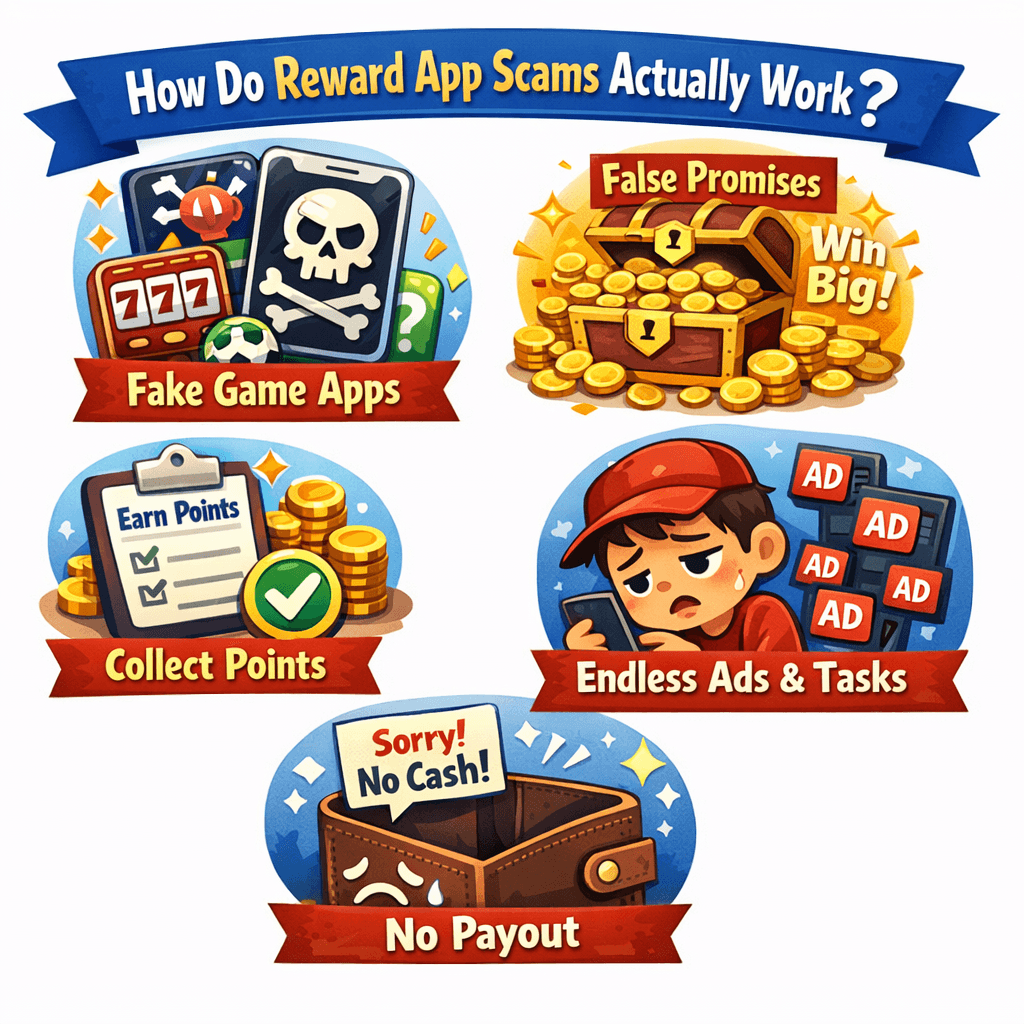
Understanding how reward app scams work makes the red flags far easier to catch in real time. Most follow a consistent three-phase structure.
Phase 1 — The Hook
The app advertises aggressive earning potential. Promises like "earn $50 a day just by watching videos" or "cash out instantly with no minimum" attract users looking for extra income. The app store listing often features fabricated screenshots of large payouts and a flood of glowing five-star reviews.
Phase 2 — The Build-Up
Once installed, the app shows your balance climbing fast. You complete tasks, watch ads, or answer surveys, and a counter climbs toward the payout threshold. This phase is designed to create investment. The more time you put in, the more reluctant you are to walk away, even when something feels wrong. This psychological trap is often called the "sunk cost effect," and reward app scams are built entirely around exploiting it.
Phase 3 — The Block
When you try to withdraw, one of several things happens: the threshold suddenly increases, a "verification fee" appears, the support team requests more documents, your account gets flagged for vague "suspicious activity," or your withdrawal request simply disappears with no update. At this stage, your real earnings, your time, have already been extracted.
⚠️ Warning: If an app's payout threshold changes after you have already started earning, do not invest more time. A legitimate platform locks its payout rules in advance and does not change them mid-session without clear prior notice.
What Are the Most Common Types of Reward App Scams?
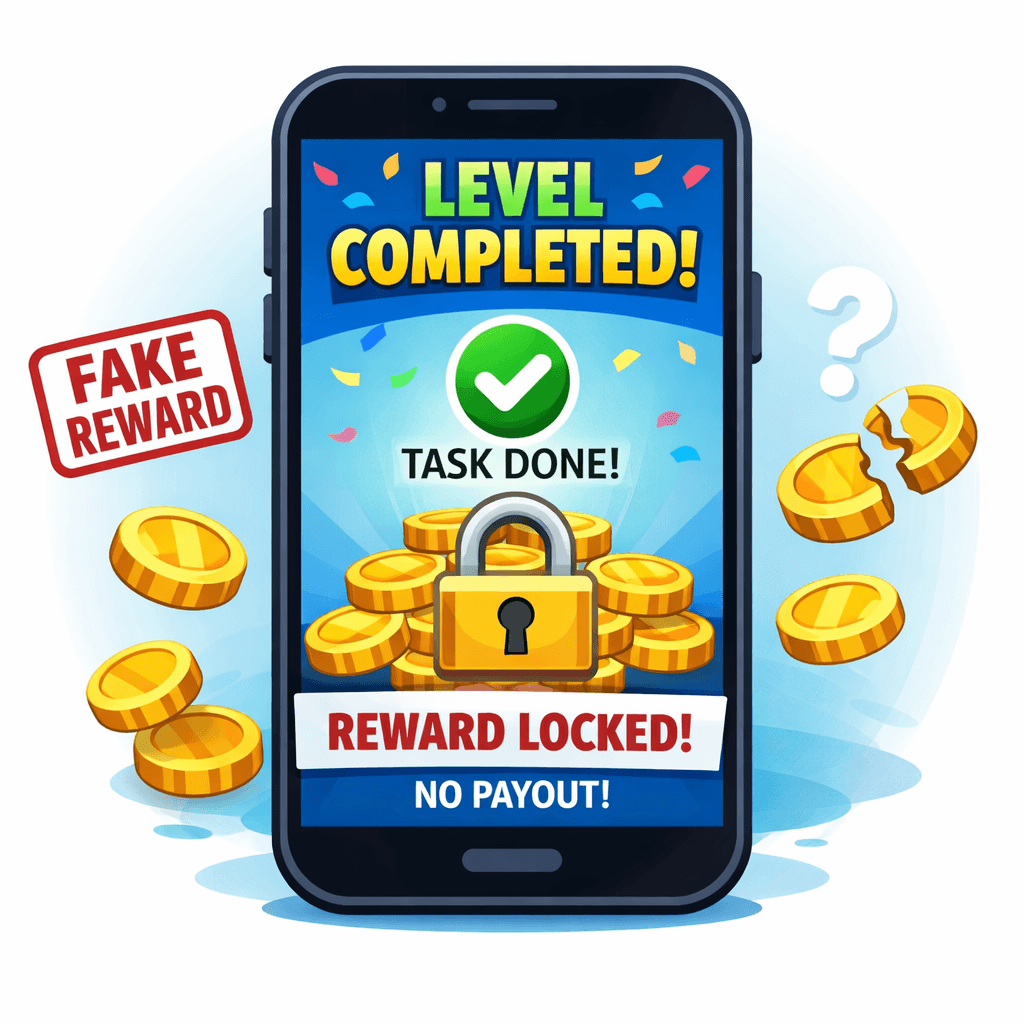
Recognizing the distinct types of reward app scams helps you identify the specific pattern being used, rather than just sensing something feels wrong. Here are the most frequently reported categories based on consumer complaint patterns.
- Infinite threshold scam: The minimum cashout keeps increasing each time you approach it. You start at $10, reach it, then find it has moved to $30, then $50, indefinitely.
- Verification fee scam: Once you request a withdrawal, you are told your account needs "verification" requiring a payment, framed as a tax deposit, processing fee, or security bond. This is the core mechanic behind most reward app withdrawal scams.
- Data harvesting scam: The app collects your name, address, phone number, email, and sometimes Social Security or bank details under the guise of payout setup, then monetizes or sells that information.
- Referral pyramid scam: The app pays nothing for your own activity but promises big rewards for recruiting friends. Only those at the very top of the referral chain see any real benefit.
- Fake cashback scam: The app claims to give you cashback on purchases but never credits the amounts promised, citing technical errors or missing receipts every single time.
- Ghost app scam: An app that simply vanishes, removed from the store, domain inactive, support emails bouncing, before any users have been paid.
What Red Flags Should You Look For Before Downloading?
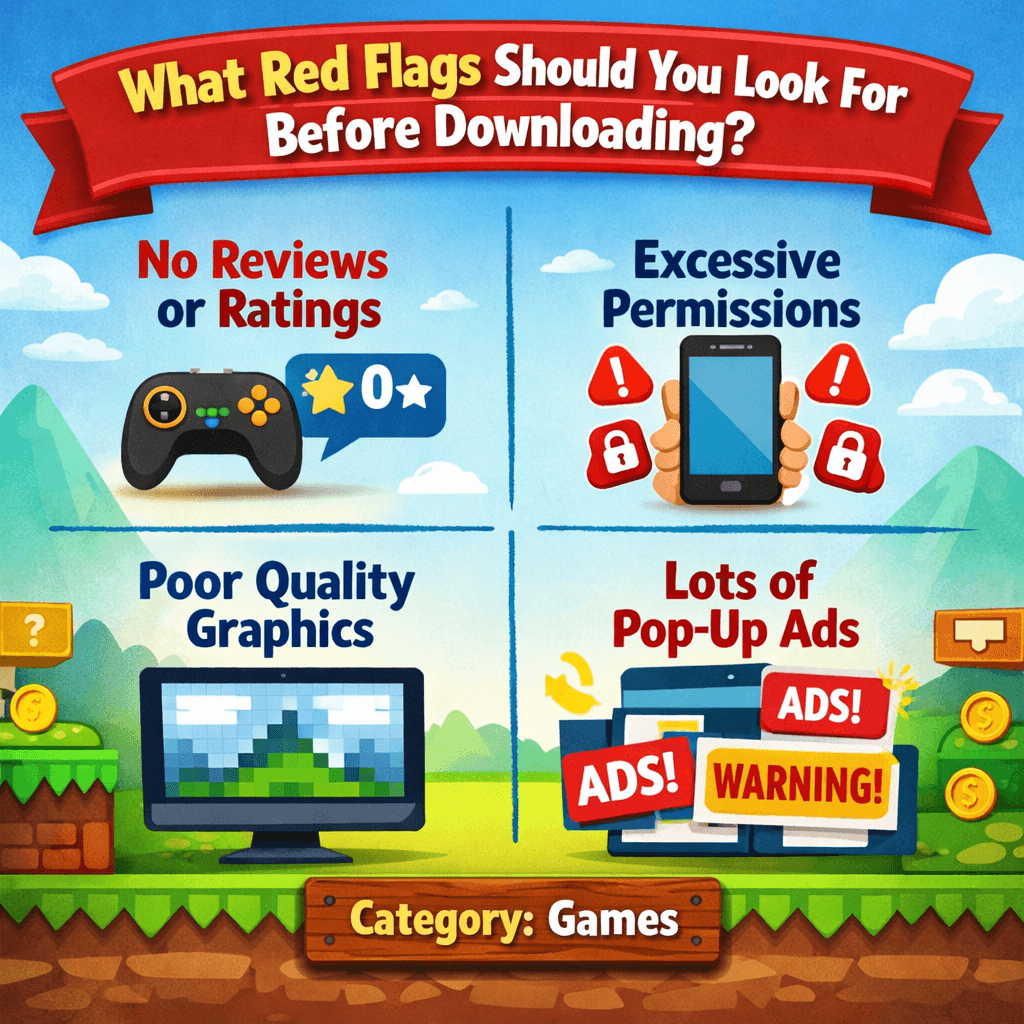
Red Flags in the App Store Listing
Fake app reviews on reward apps and misleading store listings are often the first layer of deception you encounter. Scam apps over-promise in their descriptions and use manufactured social proof to build credibility before you have any real experience with the platform.
- Earnings claims that are clearly disproportionate, "make $200 daily in your spare time" with no explanation of the mechanism.
- Reviews that use nearly identical phrasing, phrases like "This app changed my life!" repeated across dozens of accounts with no activity history.
- A developer with no verifiable identity, no website, and no other published apps, or conversely, dozens of cloned apps under slightly different names (this pattern is itself a de facto reward app scam list signal).
- No privacy policy linked in the listing, or a privacy policy that is generic boilerplate with no company name filled in.
- Screenshots showing specific dollar amounts with no explanation of what tasks generated them.
- A very recent publish date combined with an implausible number of downloads and five-star reviews.
✅ Expert Tip: Among the most effective expert tips for reward app scams: before installing any new app, search the developer's name plus "scam" and "review" independently. Check Reddit, Trustpilot, and the Better Business Bureau. If no one outside the app store is talking about it positively, or if complaints about blocked withdrawals dominate the results, move on before investing a single minute of your time.
Red Flags Inside the App
Once inside the app, watch carefully for these signs that the platform is not operating in good faith:
- No clear Terms of Service explaining how earnings are calculated or what triggers payout eligibility.
- A timer or countdown creating artificial urgency, "complete 3 more tasks in the next 10 minutes to unlock your balance".
- Reward balances that increase suspiciously fast during early use, then slow dramatically once you approach the threshold.
- Tasks that loop endlessly or redirect to external apps without crediting earnings.
- No visible company information, no About page, no legal address, no business registration number.
How Do You Recognize Fake Payouts and Withdrawal Scams?
Knowing how to spot reward app scams at the withdrawal stage is especially critical because by that point, users have already invested real time. Reward app withdrawal scams are among the most frustrating because the user genuinely believes money has been earned. Here is a direct comparison between what fake payout situations look like versus how legitimate apps handle the same moments.
🚨 Critical Rule: If any app asks you to pay money in order to receive money you have already earned, that is a scam, full stop. No legitimate reward platform charges users a fee to access their own earnings. This applies regardless of how the fee is framed: "tax," "processing," "security deposit," or "verification bond."
How Do Fake "Support" Teams String You Along?
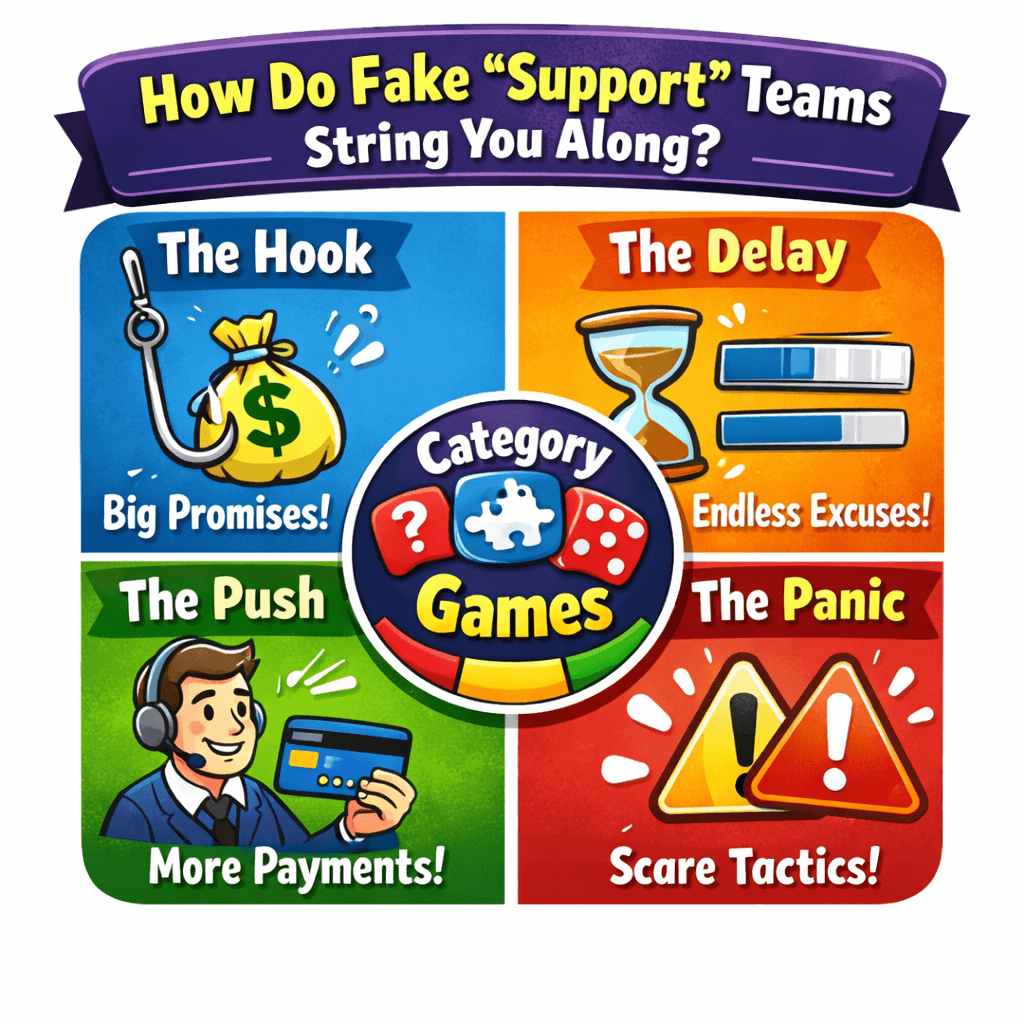
Fake support is one of the most underappreciated tools in a scam app's arsenal. It serves one purpose: to keep you engaged just long enough that you either stop asking for your money, exhaust yourself into giving up, or hand over sensitive personal information in the name of "identity verification."
What Fake Support Actually Looks Like
- Generic, scripted responses: Every reply is a variation of "We are looking into your case. Please allow 5–7 business days." The case never resolves.
- No direct contact options: Fake support rarely offers a phone number, live chat, or verifiable email. Everything runs through a ticketing system that the company can ignore indefinitely.
- Request escalation: The team asks for increasingly sensitive documents, passport scans, utility bills, bank statements, under the guise of verification. This is data harvesting, not a genuine process.
- Social media redirection: Users are sent to a Facebook page or Instagram DM where complaints are hidden or deleted without any substantive reply.
- The "manual review" trap: Your withdrawal is placed in "manual review" with no defined end date, a polite way of saying it will never be processed.
⚠️ If/Then Rule: If a support team asks for a photo ID or bank information before processing your withdrawal, then stop immediately and do not send anything. Cross-reference the app's privacy policy and Terms of Service to verify whether this was disclosed upfront. If it was not, treat the request as an attempt to harvest your personal data, not a legitimate verification step.
How to Test Whether Support Is Real
Before trusting any support channel, run through this quick process:
- Ask a specific, verifiable question, like "What is your company's registered legal name and state of incorporation?"
- If the response is evasive, generic, or takes more than 72 hours, treat that as a clear warning sign.
- Search the support email address independently. Legitimate companies use branded domains, scam cash reward apps frequently use free providers like Gmail or Yahoo.
- Check whether the support agent uses a real, consistent name. Persistent anonymity in customer interactions is not standard practice for legitimate platforms.
- Look for a verifiable physical address or company registration number in the Terms of Service or About page.
How to Read Reward App Reviews Without Getting Misled
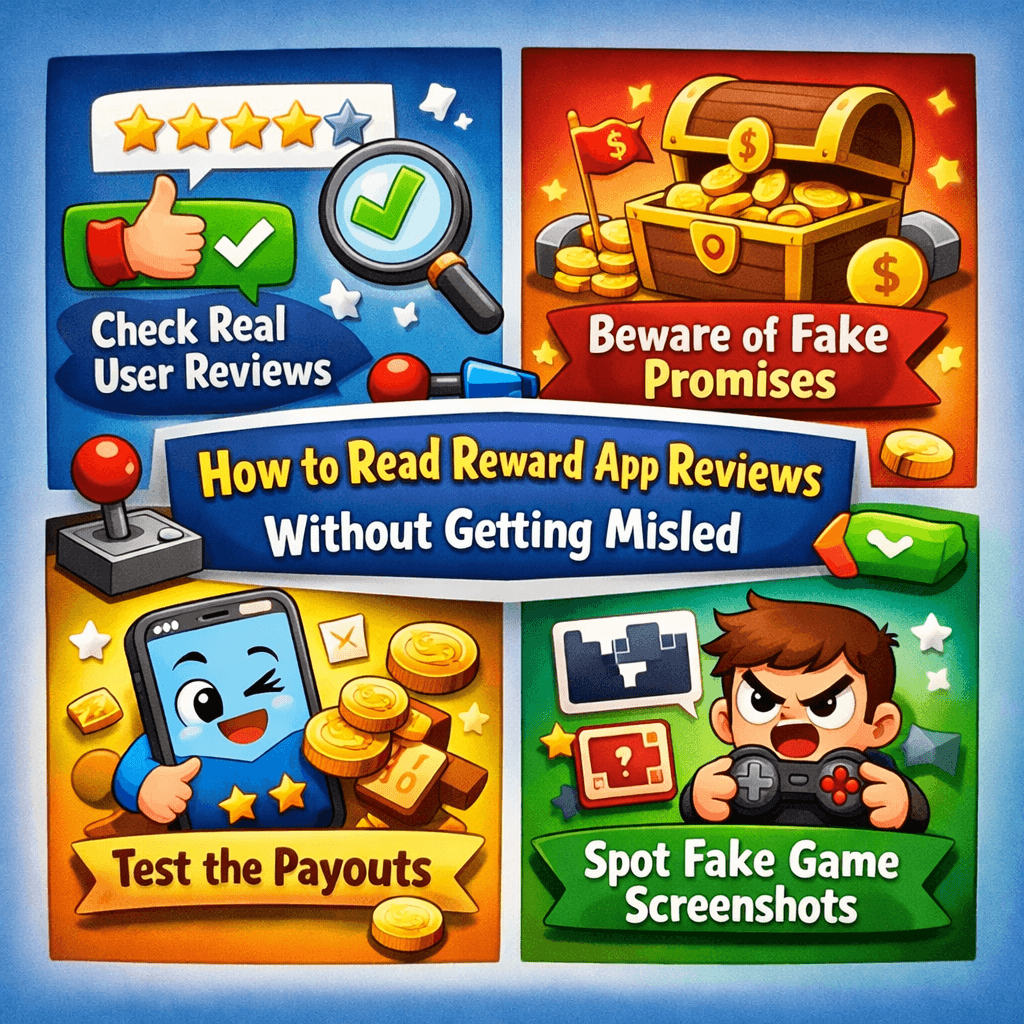
Fake app reviews on reward apps are a well-established part of the scam ecosystem. App stores have improved their detection systems, but manufactured reviews still slip through, especially on newer apps not yet on anyone's radar.
Signs That Reviews Are Fabricated
- Multiple reviews posted on the same day, often coinciding with the app's launch date.
- Reviewers with no profile photo, no prior review history, and accounts under one month old.
- Reviews that are vague and emotional rather than specific, "Amazing app, love it!" without mentioning what was earned or through which tasks.
- A suspicious ratio of five-star reviews to all others, with almost no two or three-star reviews in between.
- Repeated use of phrases that mirror the app's own marketing language verbatim.
Where to Find Verified Reward App Reviews
Verified reward app reviews live on platforms where the developer cannot easily suppress or manipulate them. Cross-checking multiple independent sources before committing your time is the single most effective protective habit you can build.
- Reddit: Subreddits like r/beermoney, r/digitalnomad, and r/WorkOnline have active communities that flag scam apps openly and quickly. Search the app name plus "legit" or "paying."
- Trustpilot: Focus on one and two-star reviews, which are far harder for developers to suppress than app store ratings.
- Better Business Bureau (BBB): The complaint database reveals patterns of withdrawal issues and support failures that often predate wider public awareness.
- YouTube: Search "[App Name] cashout proof." If results are absent or dominated by complaints, that tells you what you need to know.
Do's and Don'ts When Evaluating a Reward App
Reward App Scams: A Regional and Platform Note
Scam app prevalence, available payout methods, and consumer protection options all vary by country and platform. In the United States, users can report reward app scams to the Federal Trade Commission, the Internet Crime Complaint Center (IC3), and their state's attorney general. Platform rules also differ, Apple's App Store and Google Play both run review processes, but neither store can catch every fraudulent listing before it reaches users. Always research independently, regardless of where you download.
ℹ️ Platform Variability Note: Payout rules, minimum thresholds, supported payment methods, and legal protections for users vary by country and can change as platform policies evolve. Always verify the app's current Terms of Service for the most accurate information, and confirm that the offered payment method is available in your region before investing your time. Rules can and do change.
Conclusion: Your Awareness Is Your Best Protection
The reward app space has real, legitimate opportunities, but it also has a well-documented underbelly of scam cash reward apps, inflated payout promises, fake app reviews on reward apps, and reward app withdrawal scams designed to extract your time, data, and sometimes your money without ever delivering what was advertised. Understanding the distinct types of reward app scams, from infinite threshold traps to data harvesting disguised as verification, and applying the expert tips for reward app scams covered in this guide puts you in a genuine position of advantage. Cross-checking verified reward app reviews on independent platforms, watching for real reward app scam examples in the apps you try, and knowing exactly how to spot reward app scams before they cost you anything are the habits that separate users who get paid from users who get played. At CashDrill, our goal is to make sure you walk into every reward app experience informed, skeptical in the right places, and confident in telling the difference between a platform worth your time and one that was never going to pay you at all.