
- You can legitimately earn money from reading, but most options pay modest supplemental income, not a full-time salary replacement.
- The highest-earning paths (proofreading, editorial reading, beta reading for publishers) typically require demonstrable skills or an established track record.
- Apps that pay you to read usually reward engagement time or opinion surveys, expect cents per session, not dollars per hour.
- Getting paid to read emails is real, but earnings are low; treat it as passive micro-income, not a primary hustle.
- Scams in this space are common — any platform that asks you to pay an upfront fee to access "reading jobs" should be avoided immediately.
- Platform rules and pay rates vary by country and can change without notice; always verify current terms before investing time.
Is Getting Paid to Read Actually Realistic?
Let us be honest upfront: the phrase "get paid to read books" conjures images of lounging on a sofa while dollars roll in. The reality is more nuanced, and a lot more useful once you understand it clearly.
Reading for money exists on a spectrum. On one end, there are passive micro-earning apps where you read short content and collect small rewards. On the other end, there are professional roles, proofreaders, manuscript readers, literary consultants, where experienced readers earn real per-project fees. Most people fall somewhere in the middle, picking up side income that's real but modest.
At CashDrill, we have reviewed dozens of earning platforms and spoken with real readers who have turned this into a consistent side income, the patterns are clear, and this guide distills exactly what works.
Quick Definition: Online reading jobs refer to any compensated activity where reading is the core task, this includes book reviewing, editorial reading, proofreading, beta reading manuscripts, reading and responding to paid newsletters, or earning rewards through reading-focused apps.
If your goal is a side hustle that adds $50–$300/month, several legitimate options exist. If you are hoping to replace a full-time income purely by reading, the realistic path requires building professional-level skills first, particularly in proofreading or editorial work.
What Are the Legitimate Ways to Make Money Reading?
There are six broad categories worth your time. Each has a different skill floor, earning ceiling, and time investment.
Platform & Region Note: Pay rates, availability, and platform features vary significantly by country. Apps that pay well in the US may have limited functionality in other regions. Always check current platform terms, rates change frequently and the information above reflects general market ranges, not guaranteed figures.
How Do Reading Apps Actually Pay You?
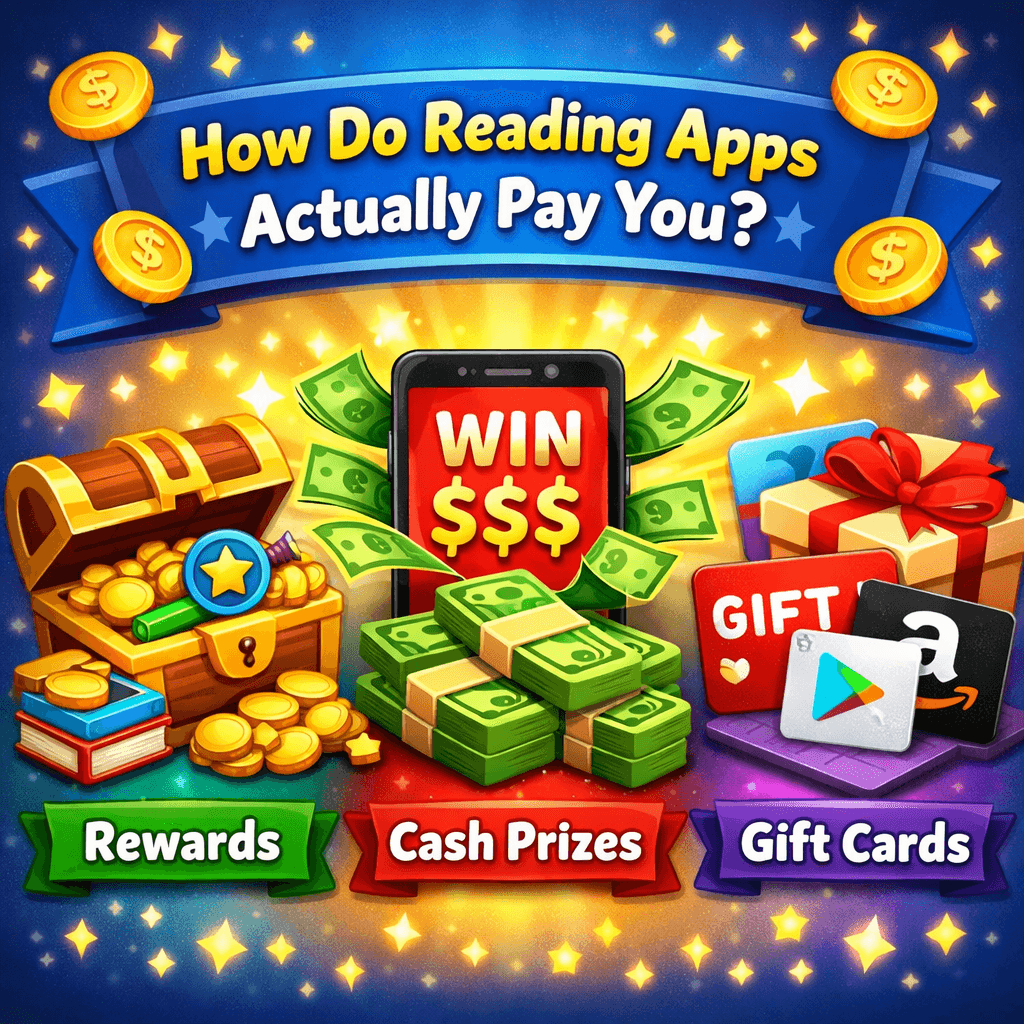
This is one of the most searched questions in this space, and for good reason, because the mechanics aren't always obvious.
How Reading Apps Work
Most apps that pay you to read operate on a points or rewards model: you earn points for time spent reading content, completing short quizzes about what you read, or sharing opinions on articles. Points convert to gift cards, PayPal cash, or sweepstakes entries, not direct hourly wages.
Some apps monetize your attention data, showing you content from advertisers and paying you a small share for engaging with it. Others are market research tools disguised as reading platforms, collecting your reading preferences and opinions to sell to publishers or brands.
Common App Models, How Do Reading Apps Pay You?
- Time-based rewards: You earn points simply for minutes spent reading. Earnings are very low but require zero effort beyond opening the app.
- Comprehension quizzes: You read a passage and answer questions. Higher accuracy can unlock bonus points.
- Opinion surveys tied to content: After reading an article, you rate or respond. These typically pay slightly more than passive reading.
- Referral bonuses: Many apps boost income significantly when you refer other users, sometimes this pays more than the reading itself.
✅ Tip: If you want to maximize app-based earnings, use the referral program consistently. For most platforms, referring 5–10 active users can double or triple your monthly earnings from reading alone.
How Do You Get Paid to Read Emails?
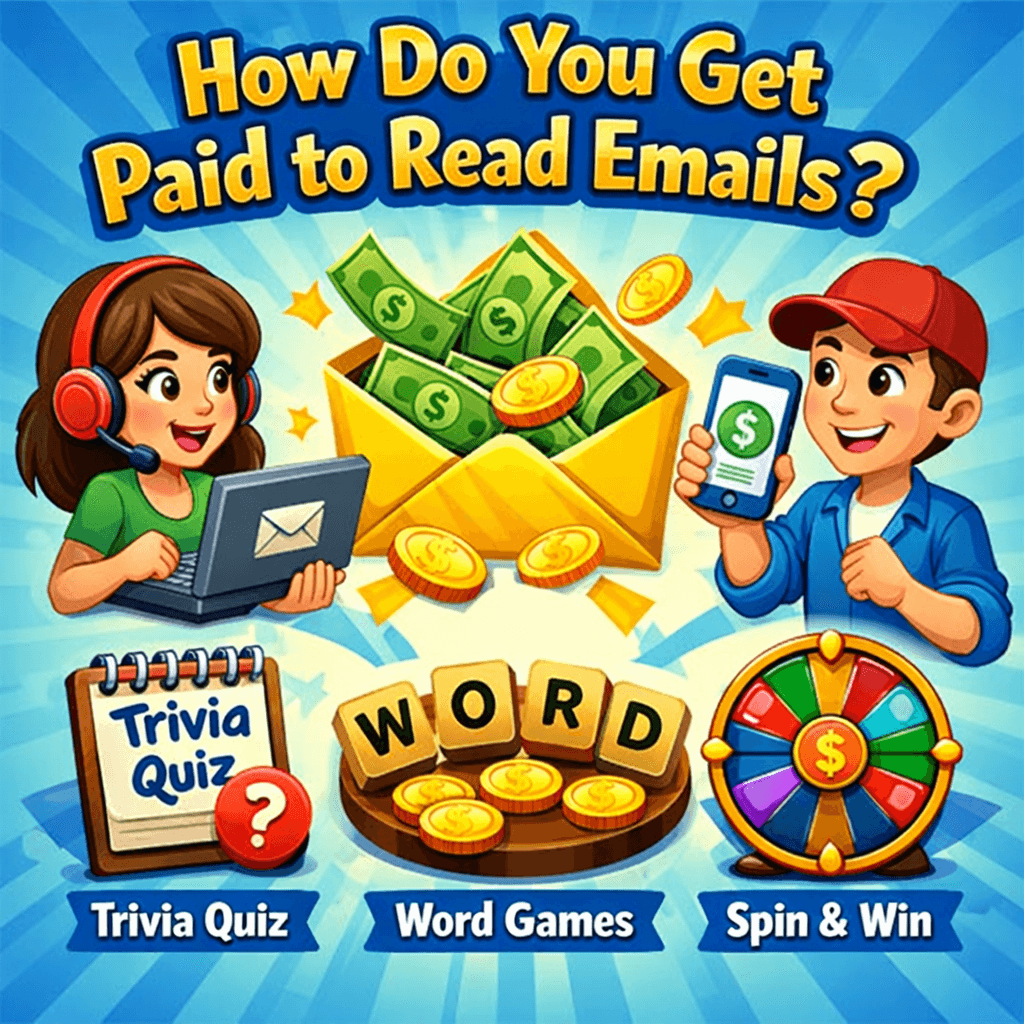
Paid-to-read (PTR) email platforms have existed since the early 2000s. The model is simple: advertisers pay platforms to send marketing emails; platforms pay you a fraction of that to open and click through those emails.
What to Realistically Expect
- Most platforms pay fractions of a cent per email, $0.001 to $0.02 is typical.
- Some platforms offer slightly higher rates for "premium" emails that require you to visit a website or complete a short action.
- Monthly earnings for active users generally range from $1 to $10, with higher-earning months possible if the platform runs bonus campaigns.
- Platforms like InboxDollars and Swagbucks bundle paid email reading with other tasks (surveys, cashback) that boost overall earnings.
If you are wondering how to make money reading emails efficiently, the honest answer is: don't do it as a standalone activity. Stack it with other micro-earning tasks on the same platform during dead time, commuting, waiting in line, or watching TV.
Can You Get Paid to Read Books Online — Really?
Yes, but the routes that pay meaningfully require more than just reading. Here is how the most credible options work:
Beta Reading for Independent Authors
Independent authors regularly seek beta readers, people who read an unpublished manuscript and provide structured feedback on pacing, character consistency, plot holes, and reader experience. Most indie authors pay $0–$50 for a full manuscript review; established beta readers with a portfolio can charge $75–$150 for full novels.
Platforms like Reedsy, Beta Readers & Critique Partners (Facebook groups), and StoryOrigin connect authors with readers. Building a track record by starting with free reads is common practice before charging fees.
Book Reviewing for Publishers and Bloggers
Professional book reviewers typically don't get paid cash, they receive free advance reader copies (ARCs) in exchange for honest published reviews. However, reviewers who build an audience (a book blog, a BookTok or Bookstagram following) can eventually monetize through affiliate commissions, sponsored content, and advertising.
If you genuinely love recommending books, this is one of the more sustainable long-term paths, but it's closer to content creation than passive income.
Proofreading: The Highest-Earning Reading Job
Of all legitimate reading jobs from home, proofreading has the highest earning ceiling and is genuinely scalable. Freelance proofreaders charge by the word or hour, and experienced professionals regularly earn $25–$50+ per hour on platforms like Fiverr, Upwork, or through direct client relationships.
The requirement is real: you need a strong command of grammar, style guides (Chicago, AP, APA), and ideally some training or certification. Courses from providers like Proofread Anywhere are widely referenced in the community, though they are a paid investment, not a requirement in themselves.
⚠️ Honest Reality Check: Proofreading is often marketed as an easy side hustle for "anyone who loves to read." Reading ability is necessary but not sufficient, systematic error-detection, knowledge of style guides, and client communication are equally important. If you're starting from zero, budget 2–6 months of skill-building before landing paid work.
Sensitivity Reading: A Niche but Growing Field
Sensitivity readers review manuscripts for authentic and respectful portrayals of specific communities, by race, disability, religion, sexuality, and more. This work is compensated because it requires lived experience combined with articulate written feedback. Pay typically ranges from $150 to $600 per project depending on manuscript length and the reader's experience level.
Publishers, agents, and independent authors all hire sensitivity readers. Building a professional profile on platforms like Writing the Other's resource lists, or reaching out directly to literary agents, is the standard entry point.
How to Start Getting Paid to Read: A Step-by-Step Approach
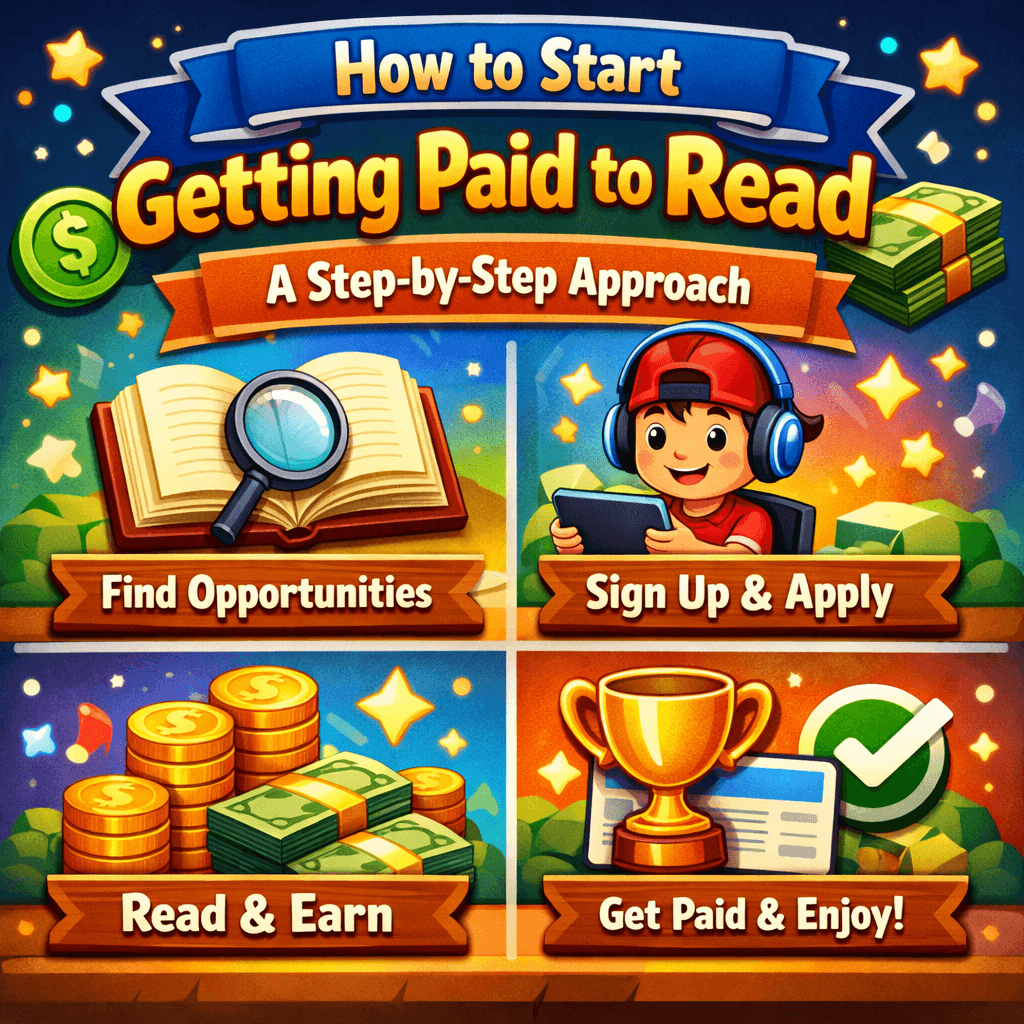
The fastest path depends entirely on your current skills and goals. Here is a practical framework:
- Assess your reading strengths honestly. Are you detail-oriented enough for proofreading? Do you read widely enough in a genre to give beta feedback? Do you have lived experience relevant to sensitivity reading?
- Pick one primary method to develop first. Spreading across five methods at once leads to low commitment and low results in all of them.
- Create a sample or portfolio piece. For proofreading, proofread a public-domain text and document the errors found. For beta reading, write a detailed critique of a book you loved or disliked.
- Join relevant communities. Facebook groups for authors, subreddits like r/freelanceWriters, and platforms like Reedsy put you in front of people actively looking for reading help.
- Set a rate once you have one completed project. Even if the first job is free or discounted, having one real project under your belt is worth more than any resume line.
- Stack passive options alongside active work. While building your primary skill, apps and paid email platforms add small amounts without time investment.
Do/Don't: Getting Started the Right Way
What Are the Biggest Scams to Avoid?
The demand for "get paid to read" content, and the many websites that pay you to read that do exist, has created a parallel ecosystem of schemes that prey on people who want flexible reading income. These are the red flags that separate real opportunities from traps:
⛔ Warning: Scam Indicators
- Upfront registration or "starter kit" fees. Legitimate reading platforms, publishing houses, and freelance marketplaces never charge you to access work. Full stop.
- Guaranteed income claims. No legitimate platform guarantees specific earnings. If a site promises "$500/week just reading," close the tab.
- "Secret" book reviewer databases. Publishers do not maintain secret paid reviewer lists that require a paid membership to access. These are content farms or data-harvesting sites.
- MLM-style reading platforms. If a platform's primary income model is recruiting others rather than reading itself, it is a multi-level marketing scheme dressed up as a reading gig.
- Platforms with no traceable business information. Any site paying you real money should have a verifiable address, customer support, and public terms of service. If you can't find these, don't use the platform.
Quick Checklist Before Joining Any Reading Platform
- Can I find genuine user reviews on Reddit, Trustpilot, or independent review sites?
- Are the payment terms, minimum payout, and withdrawal methods clearly stated?
- Does the platform have verifiable contact information and a privacy policy?
- Am I being asked to pay anything before I can start earning?
- Is the earning model based on my reading/work, not primarily on recruiting others?
- Have I checked whether this platform is available and fully functional in my country?
The Bottom Line: Is This Worth Your Time?
Reading for money is a real category of side hustle, but it rewards people who approach it with a skill-first mindset, not a passive income fantasy. The difference between someone earning $15/hour proofreading and someone earning $2/month on a reading app isn't luck. It is skill development, intentional positioning, and realistic expectations.
If you are an avid reader looking to build a side hustle reading books, start by identifying where your reading strengths are strongest, genre knowledge, attention to grammar, lived experience in a specific community, and build from there. Layer in the passive options as a bonus, not as the foundation.
The people who actually get paid to read consistently treat reading income as a craft, not a windfall. That shift in perspective is the most important thing this guide can leave you with.